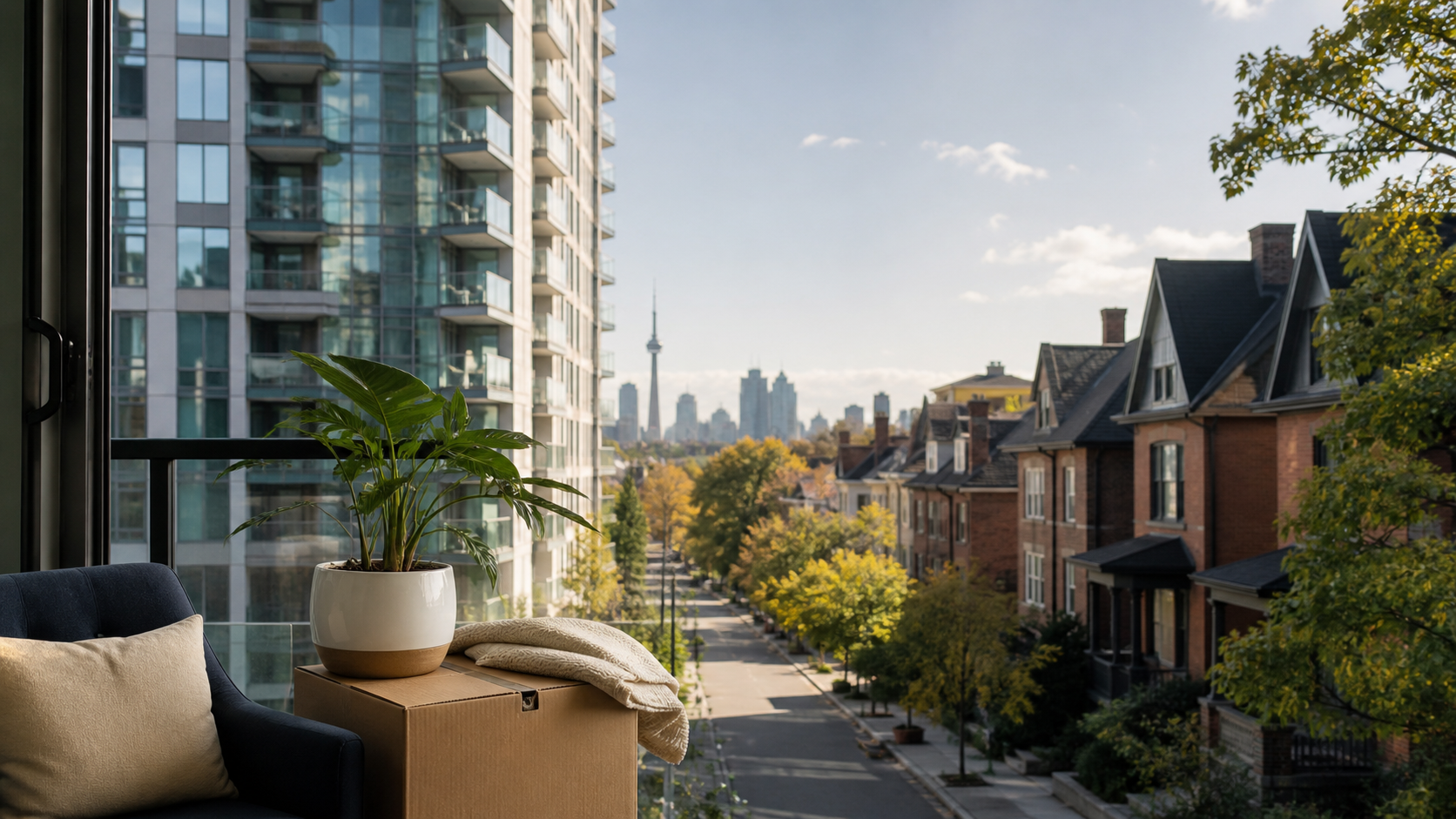
Moving from a Toronto condominium to a house can provide more space and control over how you use the property, but it also changes your responsibilities and monthly costs. A useful comparison goes beyond square footage and asking price.
This is a common version of a GTA move-up purchase. The goal is to understand the full transition before committing to a neighbourhood or property.
Compare the complete change
- Net proceeds from your condo sale
- Mortgage, property tax, utilities, insurance, and maintenance
- Commuting and day-to-day travel
- Home inspection and future capital repairs
- Timing between the condo sale and house purchase
Start with your condo’s usable equity
Estimate likely sale proceeds after the mortgage payout, real estate costs, legal fees, adjustments, moving expenses, and a reserve. If the condominium has parking, a locker, upgrades, or a strong location within the building, those details may affect market positioning. Current comparable sales matter more than an old valuation.
Use the GTA move-up equity guide and request a current home evaluation before setting a purchase range.
Replace the condo fee with a full house budget
A house may not have a monthly condominium fee, but that does not make maintenance free. Plan for property taxes, utilities, exterior maintenance, seasonal work, and irregular items such as roofing, heating and cooling equipment, drainage, or windows.
| Condo ownership | House ownership |
|---|---|
| Shared systems and common elements | Direct responsibility for the structure and lot |
| Monthly fee funds shared operations | Owner creates a maintenance reserve |
| Status certificate helps assess the corporation | Inspection and property-specific due diligence become central |
| Often less exterior work | More control, with more ongoing tasks |
Decide which type of house fits the next stage
Detached is not the only option. Semi-detached homes and freehold townhouses can offer additional space at different price points. Some townhouses are condominium properties, so confirm the ownership structure and fees rather than relying on the appearance of the home.
Test the location with your real schedule
If you are moving beyond your current part of Toronto, test work trips, family visits, childcare routines, transit access, and weekend errands. Review official transportation information such as the GO Transit system map, but verify the specific schedule and station access you would use.
For York Region options, see the guides to Markham, Richmond Hill, and Vaughan.
Inspect for the responsibilities you are taking on
A home inspection can help identify visible conditions and systems, but it is not a guarantee and may have limitations. Depending on the property, additional expertise may be appropriate for issues such as septic systems, wells, pools, environmental concerns, additions, or specialized equipment. Review permits and municipal records where relevant.
Coordinate the condo sale and house purchase
The condominium’s marketability, status certificate, closing date, and the timing of sale proceeds all affect the purchase plan. Read how to sell and buy at the same time and discuss deposit funding and closing-date gaps before offering.
Useful rule: Do not spend the entire approved mortgage amount simply because it is available. Keep room for closing costs, immediate repairs, furnishings, and a home-maintenance reserve.
A condo-to-house viewing checklist
- Lot, parking, access, grading, and drainage
- Roof, windows, foundation, heating and cooling
- Electrical and plumbing systems
- Renovation quality and available permits
- Storage, layout, and future adaptability
- Property taxes, utilities, insurance, and expected maintenance
- Travel time for your recurring destinations
This is general information, not an inspection, legal opinion, or financial recommendation. Verify property details and obtain advice appropriate to the home and your circumstances.
Compare the condo you own with the house you want
I can help you assess both sides of the move: how your Toronto condo may be positioned and which GTA houses fit your priorities and financial plan.
Related resources
- Discuss a tailored property shortlist
- Buyer services
- Ontario land transfer tax guidance
- Compare Markham and Richmond Hill
Content and links reviewed November 8, 2026.
